How does a transistor maintain a constant current?
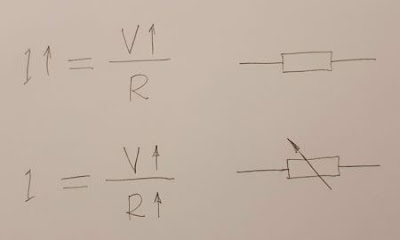
In contrast to diodes that maintain a relatively constant voltage when the current through them varies, a fundamental property of all types of transistors (BJT, FET...) is to maintain a relatively constant current when the voltage across them varies. How do they do that? As in the case of diodes, this question can be answered specifically by considering the processes in the semiconductor device. But again it would be interesting to explain this on a conceptual level by revealing the basic idea. As I have already said, this "philosophical" approach has several advantages: first, it does not require in-depth knowledge of semiconductor devices; second, it would be applicable to all 2-terminal devices that have this property. I will do this using the concept of "dynamic resistance". Generally speaking, a transistor behaves like a resistor that interferes with current creating a voltage drop and heat loss. In the initial steep part of its output IV curve, this "res...