Posts

Showing posts with the label transistor

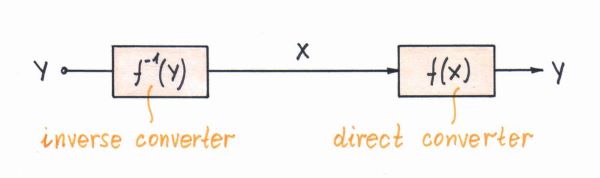
Why does the collector current depend linearly on the base current?
Image
It is well known that there is a linear relationship between the BJT collector and base current (Ic = beta x Ib). It would be interesting to explain it in an intuitive way. The power of such a "philosophical" approach is that it can explain various specific implementations. The idea In the BJT, the base-emitter voltage controls the collector current in an exponential manner. So, if we directly drive the base-emitter junction by a perfect voltage source, the bare transistor can be thought as an "antilog voltage-to-current converter". If we drive the base-emitter junction by a voltage source through a resistor or by a perfect current source, we will control indirectly the base-emitter voltage... and it will control the collector current as usual. So the base-emitter junction serves here as a "log current-to-voltage converter". The conclusion is that, in this arrangement, there are two cascaded (reverse and direct) non-linear convertors. .. and the overall re...
How does a transistor maintain a constant current?

Image
In contrast to diodes that maintain a relatively constant voltage when the current through them varies, a fundamental property of all types of transistors (BJT, FET...) is to maintain a relatively constant current when the voltage across them varies. How do they do that? As in the case of diodes, this question can be answered specifically by considering the processes in the semiconductor device. But again it would be interesting to explain this on a conceptual level by revealing the basic idea. As I have already said, this "philosophical" approach has several advantages: first, it does not require in-depth knowledge of semiconductor devices; second, it would be applicable to all 2-terminal devices that have this property. I will do this using the concept of "dynamic resistance". Generally speaking, a transistor behaves like a resistor that interferes with current creating a voltage drop and heat loss. In the initial steep part of its output IV curve, this "res...

Does a Transistor Amplify?

In this story, I have collected links pointing to my materials (questions, answers, comments...) about the basic transistor property to "amplify".

How can a transistor amplify current in a circuit?

My answer   (March 1, 2021)  to SE EE question  How can a transistor amplify current in a circuit? This is one of my favorite topics for discussion that makes me a little extreme in my speech... but I cannot put up with such a simple, clear and obvious phenomenon being explained in vague ways... That is why, when I saw the answers and comments under the question, I wrote my answer in one breath... My answer In fact, OP has understood the naked truth about the transistor "amplifier"... that it is not an amplifier at all... on the contrary, it is an "attenuator". At this stage, OP does not need detailed explanations; he needs confirmation of his guesses. It is considered the transistor is an active element used to build amplifiers... but IMHO this is not true. The transistor is not active but passive element; the only thing that it can do is to dissipate power. So, the transistor is not amplifying but attenuating element. It is just a "resistor" (non-linear,...

Trying to understand how this pnp works

Image
My answer  to SE EE question  Trying to understand how this pnp works I have been familiar with this BJT driving technique for a long time... but now I came up with a new original explanation through a "dynamic resistor" concept... Answer OP:  How can this pnp be turned off? A more in-depth conceptual answer to this question can be given if the main BJT input property is taken into account:  BJT can be more easily controlled by voltage than current since its input base-emitter junction behaves as a voltage-stabilizing element . This property can be seen in its input IV curve having an almost vertical part. This means we can control it more easily by small voltage changes instead of large current changes. So, the problem of turning off the transistor only by an "opto" is that we try to do it by decreasing the current instead of the voltage… and it opposes us. Let's see how... The output collector-emitter part of the photo-transistor can be thought of as a varying...