Posts

Showing posts with the label precision diode rectifier

Half wave rectifier query
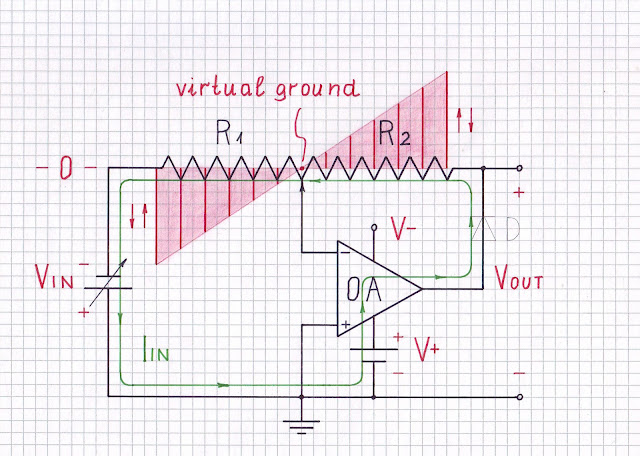
Image
 This is  my answer  to SE EE question  Half wave rectifier query . My answer Seeing the forest behind the trees After these comprehensive but specific answers, I will try to summarize what has been done and why it has been done in this way (ie, I will try to guess what were the intentions of the author when they assembled the circuit). My personal belief is that without this concluding "philosophical" part, we cannot claim to have understood the circuit... and this is true of any such situation when we are trying to understand an unknown circuit. As they say, we must see not only the "trees" but also the "forest" behind them. Initial observations OP: "In the circuit, we can see 3 differentiated parts: One half-wave rectifier, one envelope detector and a comparator." Really, we can see a rectifier in this circuit but it is not only precise but also a full wave rectifier. It seems the latter was more important for the author, because the accuracy ...

A story about the op-amp precision rectifier

Image
 My comments under SE EE question  Understanding how the simple precision rectifier works This is a story about the famous circuit with a figurative name "ideal diode". I started my contribution by writing comments under the first question. Question 1 My comments Consider the circuit as a '"disturbed op-amp follower". Here is a Wikibooks story about this phenomenon observed in negative feedback circuits. Try a simple experiment - apply some negative input voltage (e.g., Vin = -1 V) and put yourself in the place of the op-amp. What will you do to make the voltage of the inverting input equal to the voltage of the non-inverting input (the "golden rule")? What will be the op-amp output voltage? The so-called "golden rule" is introduced in the famous book of "The Art of Electronics". It says that an op-amp with negative feedback does its best to maintain equality between its two input voltages. In your circuit, it will make Vout = Vin. ...