Posts

My CircuitLab stories on StackExchange

At the beginning of this year, I started working with the  CircuitLab  simulator. Here is a list of links to my best CircuitLab stories so far: How does a transistor inverter work?  is my first CircuitLab story laid out in four consecutive steps (frames). There are no graphs of the simulations (the topic does not require it). How does this rectifier work, since the op-amp input is 0 V?  is my first full CircuitLab story, laid out in five "frames".  In addition to schematics, I have richly illustrated it with graphs  from the simulations. Why do we need R1 in a non-inverting op-amp?  is a lush story, in which I first applied schematic framing (to unify scale). Need clarification regarding op-amp's ground/ reference and common mode dependence on supply  is dedicated to the famous differential ("long-tailed") pair. To show the basic idea behind it, I have built it step by step. How does an op-amp know where ground is?  is another story dedicated...
In the world of simulations

 The prerequisites For a very long time, years, I have refrained from working with programs for simulating electrical and electronic circuits. I thought they would get in the way of my creative thinking. I have preferred to imagine for myself, with the power of my imagination, intuition and practical sense gained through real experiments and practice, the operation of circuits. I have often joked that "my brain is my simulator" :-) My concerns have been that simulators are heavy and clunky, often wrong, and require a lot of expertise to get them to correctly represent the operation of the circuits. So, I thought, I can never be sure of what they show. I have generally thought that simulations are for formal, logical-minded people who are more mathematicians than technicians. I do not know if it was just me or it is generally like that, but I have always been surrounded by such people - smart, knowledgeable... but not understanding. For them, circuits are  something existing, ...

Моите CircuitLab истории в StackExchange (My CircuitLab stories in StackExchange)

Това са линкове към най-силните ми  CircuitLab  истории от началото на годината: How does a transistor inverter work?  е първата ми CircuitLab история, изложена в четири последователни стъпки (кадъра). Няма снимки от симулациите (то и темата не изисква). How does this rectifier work, since the op-amp input is 0 V?  е първата ми пълноценна CircuitLab история, оформена в пет "кадъра". Освен със схеми,  съм я илюстрирал богато с времедиаграми от симулациите. Why do we need R1 in a non-inverting op-amp?   е пищна история, в която за първи път съм приложил рамкиране на схемите (за уеднаквяване на мащаба). Need clarification regarding op-amp's ground/ reference and common mode dependence on supply How does an op-amp know where ground is? Puzzled with parallel forward biased diodes with common anode and different cathode voltages  е  дълга история, в която разкривам философията на изходните стъпала. Non-inverting op-amp  е много дълга и богато илюст...

В света на симулациите (In the world of simulations)

Предпоставките Много дълго време, години наред, аз съм се въздържал да работя с програми за симулиране на електрически и електронни схеми. Смятал съм, че те ще попречат на творческото ми мислене. Предпочитал съм сам, със силата на своето въображение, интуиция и практически усет, натрупан чрез реални експерименти и практика, да си представям действието на схемите. Често съм се шегувал, че "моят мозък е моят симулатор" :-) Опасенията са ми били, че симулаторите са тежки и тромави, често грешат, и се иска много опит, за да ги накараме правилно да представят действието на схемите. Така, мислех си аз, никога не може да сме сигурни в това, което те показват. Като цяло съм смятал, че симулациите са предназначени за хора с формално, логическо мислене, които са по-скоро математици, отколкото техници. Не знам дали само при мен е било така или по принцип е така, но все съм бил заобиколен от такива хора - умни, знаещи... но неразбиращи. За тях схемите са даденост, нещо съществуващо, сяка...

The Secret of Invention: Invention in Action

Image
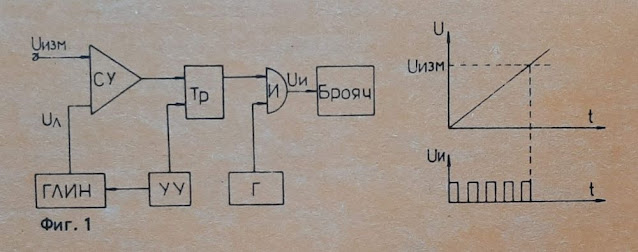
This is the seventh (last) article in the series  The Secret of Invention , published in the popular Bulgarian magazine Young Designer in 1984. In it,  I have illustrated the basic principles of invention through examples from my inventive practice.  Invention in Action Now it is time to illustrate the application of some of the basic principles of invention. The proposed ideas are selected from my own inventive experience and are interesting in that they reveal the "technology" of invention. Therefore, do not be surprised if some of them seem unreal, fantastic, and others turn out to be already known. In previous materials, we have repeatedly pointed out that in order to successfully generate new ideas, a certain mental attitude of consciousness is necessary. It occurs under certain conditions and is characterized by raising self-esteem, optimism and desire to work. As a student, for me these moments occurred during a session. This is not accidental. During the acad...

Тайната на изобретението: Изобретателството в действие (The secret of invention: Invention in action)

Image
Това е последната статия от поредицата  Тайната на изобретението , публикувана в  популярното българско списание "Млад конструктор" през 1984 г. В нея  съм илюстрирал основните принципи на изобретателството чрез примери от моята изобретелска практика. Изобретателството в действие Ето че дойде време да илюстрираме приложението на някои от основните принципи на изобретателството. Предложените идея са подбрани от собствения ми изобретателски опит и са интересни с това, че разкриват "технологията" на изобретяването. Затова не се учудвайте, ако някои от тях изглеждат нереални, фантастични, а други се окажат вече известни. В предишните материали неведнъж изтъквахме, че за да се генерират успешно нови идеи, е необходима определена психическа нагласа на съзнанието. Тя настъпва при определени условия и се характеризира с повдигане на самочувствието, оптимизъм и желание за работа. Като студент, за мен тези моменти настъпваха по време на сесия. Това не е случайно. Пре...